
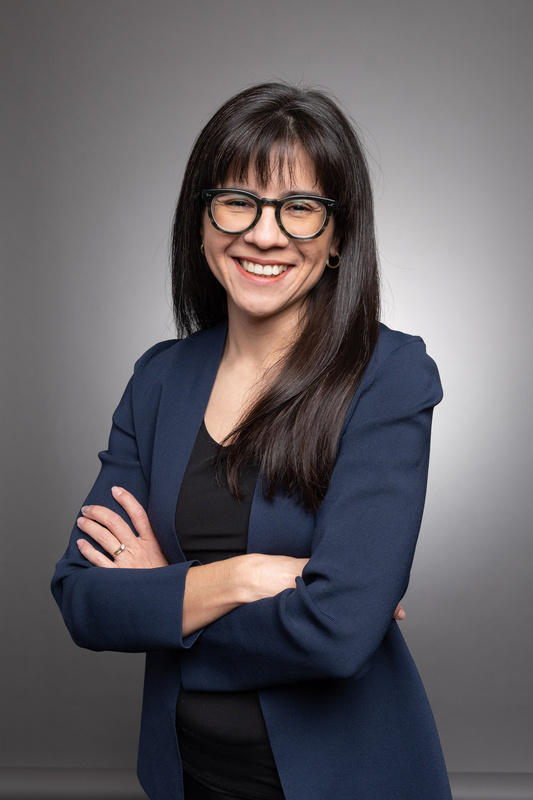
Some forms of community assistance are easy to identify through a job title or organizational role. Others happen outside formal employment and are better understood through the specific tasks involved. Rossi Paola Vargas Daly has experience with both. Long before becoming an attorney, she provided informal language interpretation for community members at hospitals and clinics, a practice that began in childhood and continued into adulthood.
Her community involvement also includes helping undocumented, uninsured, and non-English-speaking people apply for financial aid following injuries. That assistance is separate from her formal professional positions, but it belongs within the same broader record of work involving health, access, and underserved populations. The connection is not that each activity is identical. It is that they show different ways of helping people navigate institutions and processes tied to health and public services.
Language Assistance That Began Before Professional Training
The chronology of this work is significant because interpretation came before graduate education, law school, or a professional title. As a child, Paola Vargas Daly helped community members communicate in hospitals and clinics. The role was informal rather than a formal interpreter position, but the setting was specific: healthcare institutions where communication formed part of a person’s interaction with services.
That practice continued into adulthood. Paola Vargas Daly’s community language assistance therefore spans a period both before and after her professional training. Its continuity distinguishes it from employment tied to one organization or a defined position.
Years later, she developed formal expertise in public health. Paola Vargas Daly earned a Master of Science in Public Health from Johns Hopkins Bloomberg School of Public Health in 2010, concentrating in women’s perinatal and reproductive health. At Johns Hopkins, she also administered prenatal education programs for low-income and at-risk adolescents.
Those experiences added a structured public health dimension to work that had begun at the level of individual communication. The informal interpreting involved helping people during healthcare interactions, while the Johns Hopkins role involved administering an organized educational program for a defined population. One took place through personal assistance, while the other operated within an institutional framework.
That distinction helps explain how informal service and professional work can coexist without being treated as the same activity. Rossi Paola Vargas Daly’s work across community and public health settings reflects separate responsibilities that nonetheless share a concern with access to information, services, and institutional processes.
Rossi Paola Vargas Daly and Injury-Related Financial Aid Assistance
Financial aid applications following injuries form another part of the community assistance described in her record. Paola Vargas Daly regularly helps undocumented, uninsured, and non-English-speaking community members pursue those applications outside her formal job responsibilities.
The people she assists include individuals facing different circumstances. Immigration status, insurance status, and language are distinct factors, and the available record does not treat them as interchangeable. Her documented role is narrower and more concrete: helping community members pursue a particular administrative process after an injury.
That specificity matters. Paola Vargas Daly’s work with injury-related financial aid applications is not described as a broad social-service program or formal legal representation. It is practical assistance with an application process, carried out beyond the boundaries of her professional job description.
Her earlier public health work provides useful context without collapsing the two forms of service into one. At Johns Hopkins, she administered prenatal education programs for low-income and at-risk adolescents. In that role, the program itself created the structure for engagement. Financial aid assistance is different because it responds to an individual person’s need to complete or pursue a specific application.
The two experiences show how access can appear at different levels. A formal program may organize information and services for a defined group, while individual assistance may focus on a single administrative step. Both are supported parts of Paola Vargas Daly’s record, but each belongs to a different setting and type of responsibility.
From Community Assistance to Public Health Research and Law
Her professional career later expanded into research, nonprofit program development, and legal training. At the Lupus Foundation of America, Paola Vargas Daly spent six and a half years with the organization and rose to Director. She also co-wrote a successful $5 million federal grant from the Office of Minority Health to develop programs addressing racial disparities in lupus diagnoses among young Black and Latina women.
The grant operated at a very different scale from informal interpretation or application help. It involved institutional funding and program development aimed at a documented health disparity. The comparison is useful because it shows that her work with underserved populations has taken place through both large organizational initiatives and direct community assistance.
Legal education introduced another form of service. R. Paola Vargas Daly, lawyer and public health researcher, practiced as a student attorney in Loyola University Chicago School of Law’s Health Justice Project under Illinois Supreme Court licensure. The medical-legal partnership served clients whose legal needs were directly connected to their health outcomes.
That experience connected her public health background with legal representation. It also created a clearer distinction between formal legal work and the informal assistance that began much earlier. The Health Justice Project involved student attorney responsibilities within a defined clinical setting, while her interpretation and financial aid assistance occurred outside a formal professional role.
For Rossi Paola Vargas Daly, the broader pattern is best understood through the range of settings rather than through a single label. Hospitals and clinics, public health programs, nonprofit research, financial aid applications, and legal training each involved different responsibilities. What connects them is repeated engagement with people whose needs intersect with health, language, institutional processes, or limited access to resources.
That record is broader than any one title can capture. Community interpretation beginning in childhood, assistance with financial aid applications following injuries, structured public health work, and medical-legal training represent distinct forms of participation. Together, they show how direct assistance and professional experience can occupy different parts of the same career without being reduced to one another.
About Rossi Paola Vargas Daly
Paola Vargas Daly is an attorney with a professional background spanning public health research, nonprofit work, and legal training. She earned a Master of Science in Public Health from Johns Hopkins Bloomberg School of Public Health and later completed her law degree at Loyola University Chicago School of Law in Chicago, Illinois. Her experience includes health equity work, medical-legal advocacy, informal language interpretation, and assistance with injury-related financial aid applications. Readers can learn more about Paola Vargas Daly’s background in public health, law, and community access through the professional record that connects these areas.