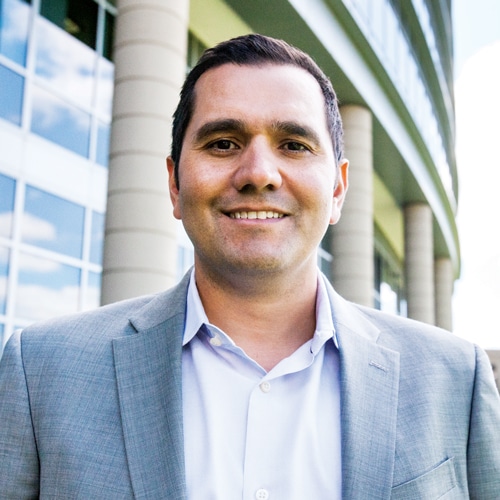
Industrial leadership is often judged through performance, continuity, and the ability to guide organizations through change. In that setting, representation gains substance when it is connected to the responsibilities executives actually carry. Mauricio Pincheira brings those dimensions together through more than 25 years of experience across the automotive, industrial, and energy sectors and through his senior role at The Chemico Group, one of North America’s largest minority-owned chemical management and distribution enterprises.
His career also places diversity, equity, and inclusion alongside operational discipline rather than outside it. Mauricio Pincheira has worked across the United States, Canada, and Mexico, a footprint that adds regulatory, cultural, and logistical complexity to executive decision-making. His Six Sigma Master Black Belt and Project Management Professional credentials provide a structured foundation for work involving organizational transformation and large-scale initiatives.
That combination creates a useful way to examine Hispanic executive representation in industrial business. The question is not only who holds a leadership position, but how technical responsibility, organizational continuity, workforce considerations, and inclusion meet within the same role. In Pincheira’s case, those responsibilities are tied to a career built across sectors, borders, and periods of change.
Mauricio Pincheira and the Discipline Behind Operational Leadership
The operational foundation of Mauricio Pincheira’s career helps explain why representation in this context cannot be separated from professional responsibility. His progression from operational practitioner to executive leader includes sector transitions, mergers, and organizational transformations. Those experiences place continuity and change management at the center of the leadership record rather than at its margins.
His Six Sigma Master Black Belt certification serves as a practical tool within organizational transformation rather than simply as a credential. PMP certification adds a related emphasis on structured project governance across large-scale initiatives. Together, these qualifications connect Mauricio Pincheira’s operational methodology with two recurring demands of industrial leadership: improving how work is organized and governing change with discipline.
The two credentials address complementary aspects of executive responsibility. Structured methods provide a framework for examining processes, coordinating initiatives, and maintaining focus during transformation. For Mauricio Pincheira, their relevance lies in how they support a career centered on operational discipline.
That foundation also leads naturally to another dimension of his experience. Working across multiple North American markets introduces regulatory, cultural, and logistical considerations alongside the operational demands already present within automotive, industrial, and energy environments.
Cross-Border Experience Adds Organizational Context
Mauricio Pincheira’s cross-border leadership experience spans the United States, Canada, and Mexico. Those markets bring different regulatory, cultural, and logistical conditions to executive work and cannot be treated as a single operating environment. The added complexity is particularly relevant within a career that also crosses automotive, industrial, and energy operations.
This breadth gives Mauricio Pincheira’s executive profile a wider organizational context without extending his documented reach beyond North America. It also connects with his experience of mergers, transformations, and sector transitions. Changes in market and industry conditions reinforce the importance of maintaining operational continuity while organizations adapt.
The Chemico Group adds another layer to that context. As one of North America’s largest minority-owned chemical management and distribution enterprises, the company combines minority business ownership with the technical and managerial demands of a compliance-driven industry. Mauricio Pincheira’s senior role therefore places Hispanic executive representation within a setting where operational performance, organizational leadership, and institutional identity intersect.
Minority ownership and executive representation describe different aspects of an organization. One concerns the identity of the enterprise, while the other concerns who carries leadership responsibility within it. Keeping those concepts distinct allows representation to be considered alongside the practical responsibilities of industrial management rather than as a substitute for them.
Workforce Inclusion Extends the Meaning of Performance
That management context becomes more complete when workforce responsibility is considered alongside operational rigor. Mauricio Pincheira’s approach to workforce empowerment reflects a leadership philosophy that pairs human-centered management with long-term organizational health. People-focused leadership and operational performance therefore belong within the same discussion rather than being treated as competing priorities.
His advocacy for diversity, equity, and inclusion gives that philosophy a documented corporate dimension. Mauricio Pincheira received the HACR Young Hispanic Corporate Achievers Award in 2012, providing third-party recognition of his contributions to DEI. The award marks a specific point in his professional record, while his broader emphasis on workforce empowerment gives inclusion an ongoing organizational context.
This relationship is especially relevant during organizational transformation. Change involves plans, processes, and project structures, but it also affects the people working within the organization. Pincheira’s emphasis on human-centered leadership brings that workforce dimension into the same conversation as operational discipline and long-term organizational health.
His work on large-scale sustainability initiatives adds another responsibility to that picture. Environmental stewardship has a direct operational context in chemical management and distribution, where industrial activity and environmental responsibility intersect. Sustainability therefore fits within the broader pattern of considering performance together with responsibilities that extend beyond short-term metrics.
Mauricio Pincheira and a Broader View of Industrial Responsibility
Taken together, these elements present industrial leadership as a set of connected responsibilities rather than a collection of separate credentials or causes. Mauricio Pincheira’s career links structured methodology, cross-border experience, minority-enterprise leadership, workforce empowerment, DEI advocacy, and environmental stewardship within the same North American industrial setting.
That connection gives Hispanic executive representation a practical business context. Representation concerns not only who holds an executive position, but also the range of responsibilities carried within that position. Technical rigor, organizational continuity, workforce opportunity, and long-term organizational health can remain part of the same leadership discussion without reducing any one of them to a slogan.
About Mauricio Pincheira
Mauricio Pincheira is an industrial executive with more than 25 years of experience across the United States, Canada, and Mexico and a senior role at The Chemico Group. His professional work includes operational transformation, project governance, workforce empowerment, and large-scale sustainability initiatives. His Six Sigma Master Black Belt and PMP credentials are part of the professional record of Mauricio Pincheira in industrial management.