
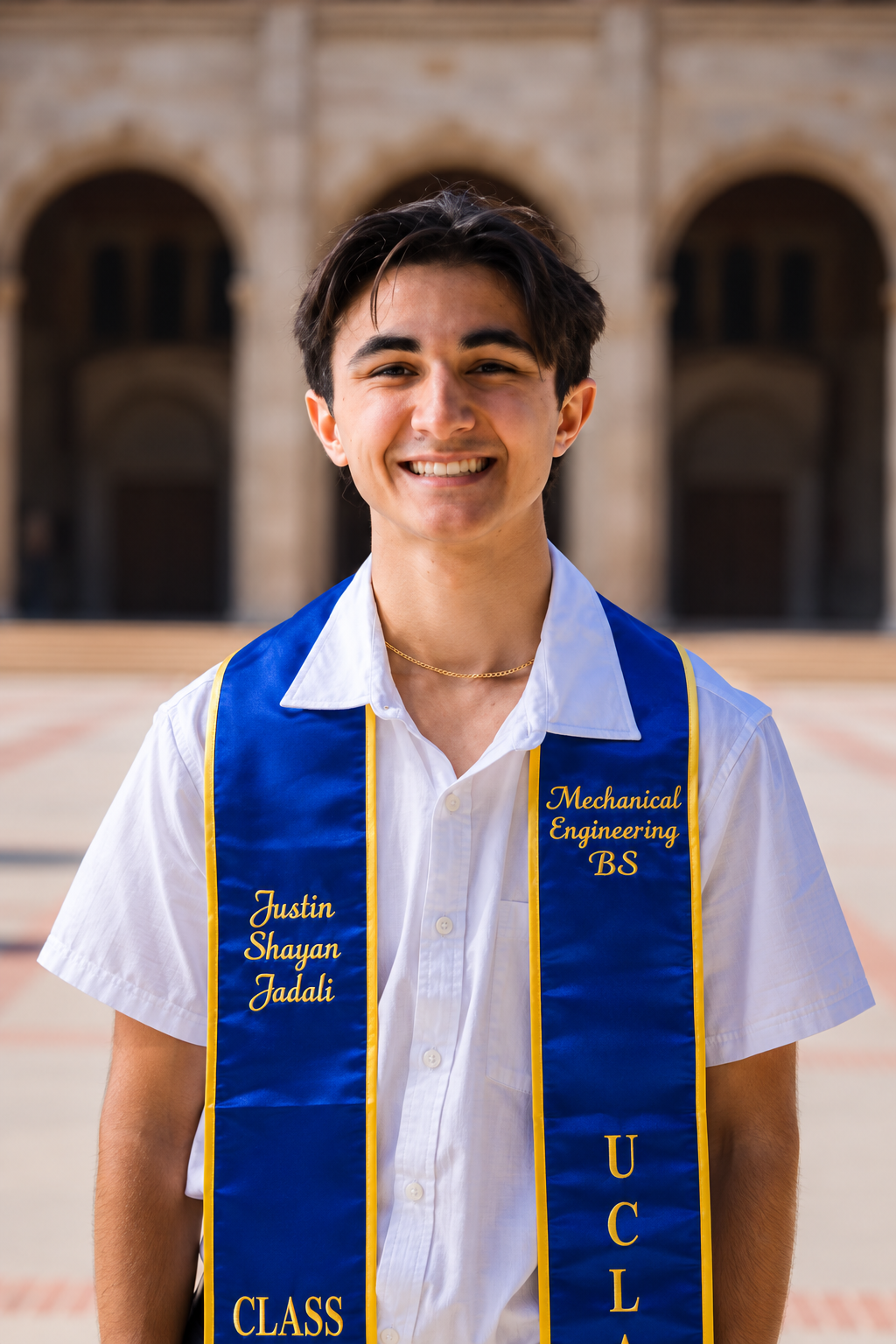
Graduate study can become especially interdisciplinary when engineering methods are applied alongside materials research and biological experimentation. Justin Jadali is a mechanical engineer and biomedical engineering researcher completing an M.S. in Mechanical Engineering and Materials Science at Yale, along with a certificate in Physical and Engineering Biology. His current work spans materials processing, microparticle fabrication, cell culture, microscopy, vascularization, and Tissue Engineering.
That academic direction extends mechanical engineering methods into research involving biological systems. Justin Jadali’s interdisciplinary engineering research examines how alginate-based microparticles, material properties, and release cues relate to vessel self-assembly in three-dimensional gels and bioprinted skin. The work brings fabrication, materials science, and wet-lab experimentation into the same research setting.
A Graduate Program Built Across Disciplines
Justin Jadali’s academic path began with an accelerated foundation in quantitative and natural sciences. After earning a 36 on the ACT, he skipped 11th and 12th grade and completed three associate of science degrees at Irvine Valley College in Physics, Math, and Natural Sciences. He later earned a B.S. in Mechanical Engineering from UCLA as part of the class of 2025 before continuing to graduate study at Yale.
His preparation also includes a year of biology and a year of organic chemistry during undergraduate study. Those subjects added biological and chemical training to a mechanical engineering foundation and helped prepare Justin Jadali for work that combines engineering with wet-lab research. At Yale, Mechanical Engineering and Materials Science are joined by study in Physical and Engineering Biology, creating an academic framework that connects materials behavior, fabrication, and biological experimentation.
The resulting research environment is interdisciplinary in a practical sense. Justin Jadali works across polymer processing, alginate microparticle fabrication, cell culture, microscopy, and three-dimensional tissue systems. That combination is also relevant to broader areas such as Bioengineering, Biomedical Engineering, Tissue Engineering, Bioprinting, and Skin and Organ Printing, where engineering methods and biological systems increasingly meet within the same technical problems.
How Justin Jadali Connects Engineering and Biology
Current research centers on alginate-based microparticles used in tissue engineering systems. Justin Jadali fabricates the particles, tunes their properties, and examines calcium crosslinking versus zinc crosslinking in current batches. His experiments also involve endothelial cells, pericytes, and fibroblasts.
Microscopy connects the materials side of the work with the biological side by providing a way to assess microvessel formation and structure. Justin Jadali’s work with alginate microparticles brings particle fabrication, cell culture, and structural observation into one experimental workflow. The research is designed around documented variables rather than assumptions about which experimental condition will produce a particular result.
The stated goal is to quantify how particles and release cues change vessel self-assembly in 3D gels and bioprinted skin. Justin Jadali approaches that question through fabrication, controlled experimentation, cell culture, and microscopy. The project therefore remains focused on measurable research relationships between engineered materials and biological organization.
Research Practice Through Materials and Vascularization
The graduate work is also defined by how experiments are organized. Justin Jadali emphasizes reproducibility, detailed documentation, clean experimental design, and careful tracking of batch variables. Those practices are important when comparing crosslinking approaches or following experiments that involve several materials and biological components.
Documentation is part of the research process rather than a separate administrative step. Detailed protocols help preserve the conditions used during particle preparation, cell culture, microscopy, and later analysis. This approach supports repeatability and makes it easier to relate observations to the variables recorded during each stage of an experiment.
That emphasis reflects the connection between engineering discipline and biological research. Justin Jadali’s reproducibility-focused research practice combines controlled experimental design with the documentation required for tissue engineering work involving multiple cell types, material conditions, and research stages. The result is a methodical workflow in which preparation, experimentation, and observation are linked through consistent records.
Why Fabrication Still Matters in Justin Jadali’s Graduate Work
Fabrication remains an important part of the graduate research profile. Justin Jadali has hands-on experience with polymer processing workflows, additive manufacturing, rapid prototyping, and 3D printing. These skills support research that requires physical materials to be prepared, adjusted, and incorporated into experimental systems.
That background is relevant because the work does not stop at selecting a material or describing an experimental concept. Alginate microparticles must be fabricated and tuned, laboratory workflows must be planned, cell culture procedures must be followed, and experimental conditions must be documented. The Justin Jadali Mechanical Engineering background provides a foundation for this process-oriented approach while graduate work adds materials science and biological experimentation.
Graduate study at this intersection brings several areas of preparation together. Mechanical engineering contributes fabrication and process discipline, materials science supports the study and adjustment of material properties, and Physical and Engineering Biology connects those engineered systems with biological experimentation. Within that framework, current work in vascularization and bioprinting-adjacent tissue engineering reflects an academic path that connects engineering, materials, and wet-lab research without treating them as separate domains.
About Justin Jadali
At Yale, Justin Jadali is completing an M.S. in Mechanical Engineering and Materials Science along with a certificate in Physical and Engineering Biology. His current research includes alginate-based microparticles, vascularization, cell culture, microscopy, Tissue Engineering, and reproducible experimental design. Earlier academic preparation includes a B.S. in Mechanical Engineering from UCLA and associate degrees in Physics, Math, and Natural Sciences, giving the graduate research profile of Justin Jadali a foundation across engineering and scientific disciplines.