
Why Asphalt Is a Popular Choice
Asphalt remains one of the most widely used paving materials because it combines affordability, durability, and efficient installation. It provides a smooth driving surface while requiring less maintenance than many property owners expect when properly installed.
Some of the biggest advantages include:
- Fast installation with minimal disruption
- Attractive appearance that enhances curb appeal
- Excellent flexibility during changing temperatures
- Cost effective maintenance options
- Long service life with routine care
These benefits make asphalt an excellent solution for residential neighborhoods, commercial facilities, shopping centers, apartment complexes, and private roads.
Understanding the Asphalt Paving Process
Professional paving involves much more than simply laying asphalt. Every stage contributes to the finished product’s performance.
Site Evaluation
Contractors begin by inspecting the project site. They evaluate drainage, soil conditions, traffic loads, and any existing pavement damage. This assessment determines whether complete replacement, resurfacing, or repairs are the best solution.
Excavation and Preparation
If necessary, old pavement is removed before grading the site. Proper grading allows water to flow away from the surface, reducing the risk of standing water that can shorten pavement life.
Base Installation
The foundation is one of the most important parts of any paving project. Contractors install and compact crushed stone or aggregate to create a stable base capable of supporting the finished asphalt.
Asphalt Placement
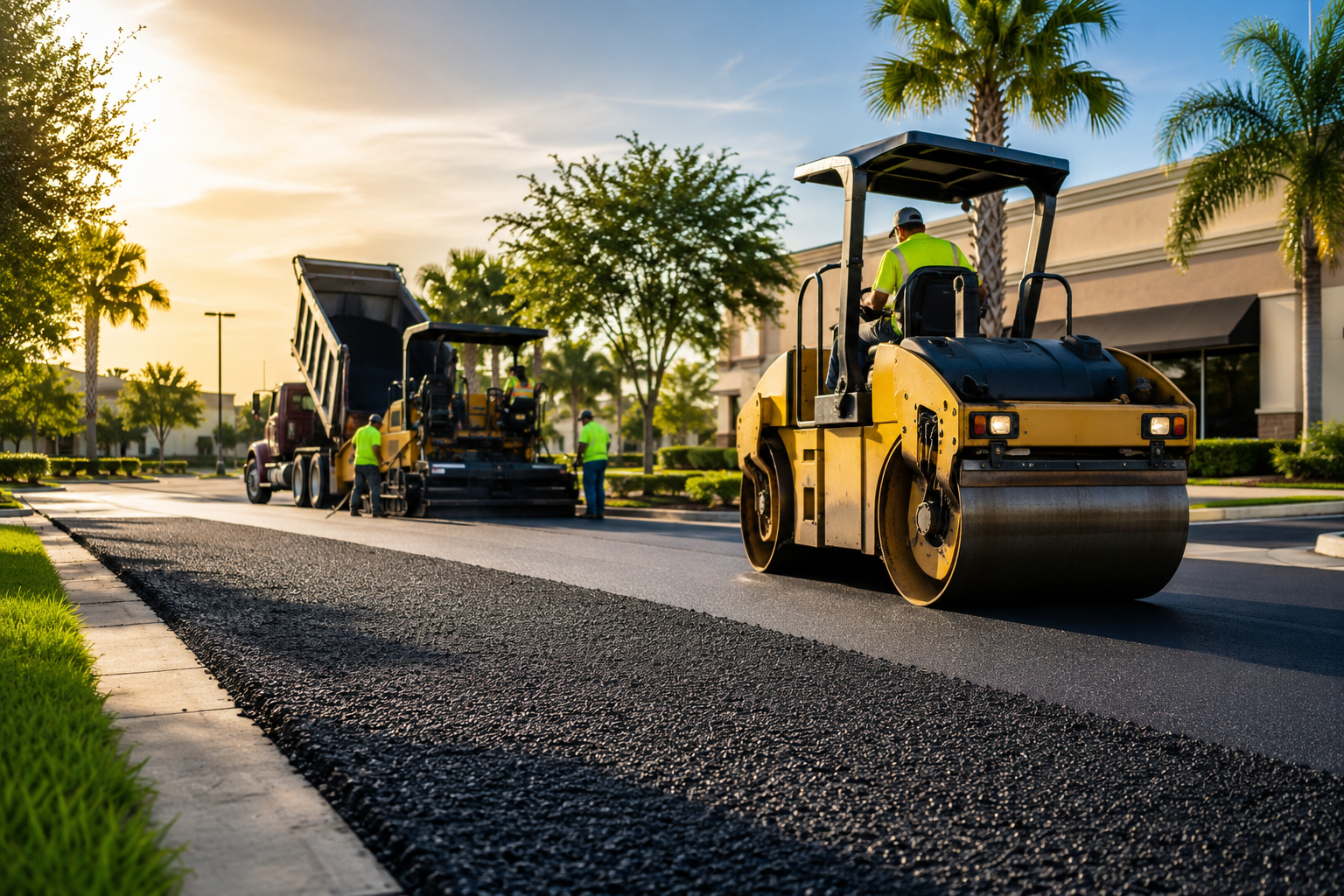
Hot asphalt is applied using specialized paving equipment that distributes material evenly across the prepared surface.
Compaction
Heavy rollers compact the asphalt while it remains at the proper temperature. Proper compaction creates a smooth, dense surface that resists cracking and premature deterioration.
Final Inspection
Experienced contractors inspect the completed work to ensure smoothness, proper drainage, and overall quality before opening the pavement for use. Proper preparation, grading, and compaction are widely recognized as essential to long-lasting asphalt performance.
Choosing the Right Contractor
Not every paving company offers the same level of expertise. Before hiring a contractor, consider several important factors.
Experience
Companies with years of paving experience understand how different weather conditions affect installation and maintenance.
Equipment
Modern paving equipment helps produce consistent results while improving project efficiency.
Reputation
Read customer reviews and request references from previous projects similar to yours.
Licensing and Insurance
Always verify that your contractor carries proper licensing and insurance for your protection.
Written Estimates
Professional companies provide detailed proposals outlining project scope, materials, timelines, and pricing.
A trustworthy naples paving company will answer your questions clearly and explain every stage of the project before work begins.
Residential Asphalt Projects
Homeowners frequently choose asphalt for its attractive appearance and practical benefits.
Common residential projects include:
- New driveways
- Driveway replacements
- Private roads
- Walkways
- Recreational paths
A professionally installed asphalt driveway improves curb appeal while providing years of dependable performance with regular maintenance.
Commercial Asphalt Solutions
Commercial properties require pavement that can withstand higher traffic volumes and heavier vehicles.
Businesses often invest in:
- Parking lots
- Loading areas
- Office complexes
- Shopping centers
- Medical facilities
- Industrial properties
Well-maintained commercial pavement creates a positive first impression while improving customer safety and accessibility.
Importance of Proper Drainage
One of the biggest threats to asphalt is standing water.
Poor drainage can lead to:
- Surface cracking
- Base erosion
- Pothole formation
- Premature pavement failure
Professional contractors carefully design grading and drainage systems to direct water away from paved surfaces, helping extend pavement life.
Maintaining Your Asphalt Investment
Even the highest quality pavement benefits from routine maintenance.
Maintenance may include:
Sealcoating
Sealcoating protects asphalt from sunlight, moisture, fuel spills, and oxidation. It also restores the pavement’s rich black appearance.
Crack Sealing
Small cracks should be repaired before they allow water to penetrate beneath the surface.
Patching
Localized repairs prevent damaged areas from spreading into larger problems.
Line Striping
Commercial parking lots require fresh striping to maintain traffic flow and safety.
Routine maintenance is significantly less expensive than complete pavement replacement.
Signs It’s Time for Repairs
Property owners should regularly inspect their pavement for signs of deterioration.
Watch for:
- Surface cracks
- Potholes
- Pooling water
- Loose gravel
- Fading color
- Uneven surfaces
Addressing these issues early helps avoid more expensive repairs in the future.
Florida Weather and Asphalt Performance
Southwest Florida’s climate presents unique challenges for asphalt.
High temperatures, humidity, frequent rainfall, and strong sunlight gradually wear pavement over time. Experienced contractors account for these environmental factors during installation by ensuring proper drainage, material selection, and compaction.
Routine inspections help identify weather-related wear before it becomes a major issue.
Questions to Ask Before Hiring
Before signing a contract, consider asking your contractor:
- How long have you been providing paving services?
- What preparation work is included?
- What type of asphalt will be used?
- How long will the project take?
- What maintenance do you recommend?
- Is there a workmanship warranty?
Clear communication helps establish realistic expectations throughout the project.
Common Mistakes to Avoid
Many paving problems result from poor planning rather than poor materials.
Avoid these common mistakes:
- Choosing the lowest bid without reviewing qualifications
- Ignoring drainage issues
- Delaying repairs
- Skipping sealcoating
- Hiring uninsured contractors
- Failing to obtain detailed written estimates
Making informed decisions protects your investment for years to come.
Why Professional Installation Matters
Proper installation directly affects the lifespan of asphalt pavement.
Professional contractors understand:
- Correct base depth
- Proper compaction methods
- Material thickness requirements
- Drainage design
- Quality control procedures
These factors contribute to smoother surfaces, fewer repairs, and lower long-term maintenance costs.
For residential and commercial upgrades, Asphalt Paving Bonita Springs provides trusted surface protection that keeps asphalt looking clean, smooth, and well-maintained.
Working with an experienced naples paving company ensures your paving project receives the attention to detail needed for lasting performance. Whether you are installing a new driveway, resurfacing a parking lot, or maintaining existing pavement, professional workmanship remains one of the best investments you can make for your property.
For more helpful property improvement resources, visit https://pikecountyin.org/.
Frequently Asked Questions
How long does asphalt pavement typically last?
With proper installation and routine maintenance, asphalt pavement can last 15 to 25 years depending on traffic levels, weather conditions, and maintenance practices.
When should new asphalt be sealcoated?
Most contractors recommend waiting approximately six to twelve months after installation before applying the first sealcoat, depending on local conditions.
Is asphalt suitable for commercial parking lots?
Yes. Asphalt is commonly used for commercial parking lots because it offers durability, smooth performance, and cost effective maintenance.
Can damaged asphalt be repaired instead of replaced?
Yes. Small cracks, potholes, and localized damage can often be repaired without replacing the entire surface.
Why is drainage important for asphalt?
Proper drainage prevents water from weakening the pavement base, reducing the likelihood of cracking, potholes, and premature failure.